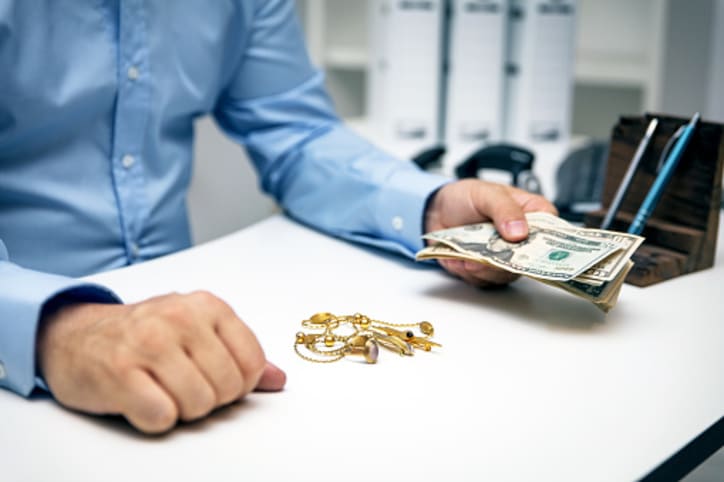

Everyone is selling their gold these days; you hear it from many of your colleagues or friends, but you wonder how you really know you won’t get scammed trying to sell your own.
Well, this is where this article comes in; we’ll get you a clear path on how to avoid any mines and pitfalls on your way to selling your gold.
There are two main methods, first, selling to a shop, and second, selling to a dealer. Let’s explore these methods.
Selling to a Shop
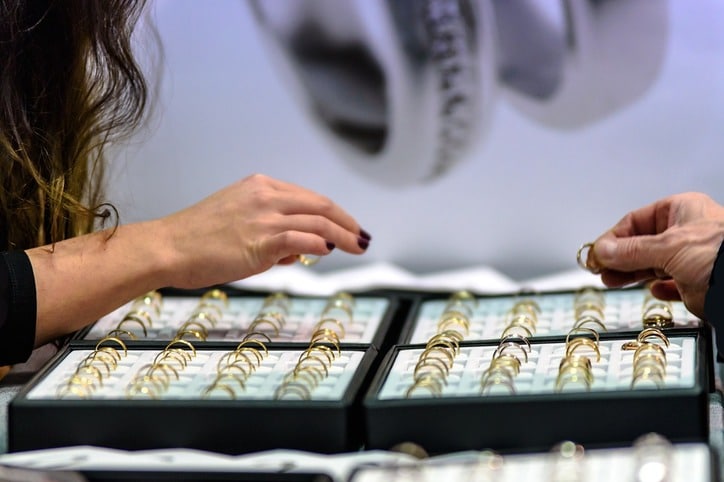
There are several steps to take when you are selling your gold to jewelry stores.
Step 1: Selling to jewelry stores
The bigger the name brand stores the less room for negotiations, but they would not try to rip you off for two reasons.
First of all, they have to uphold their brand’s name and reputation, and secondly, this is not their main source of income.
Step 2: Avoid pawn shops
The second thing is to avoid, like the plague, selling your gold to a pawn shop.
Their business is built around paying pennies on the dollar, so they can resell it cheap to the next buyer.
So it’s best to just steer clear of pawn shops. Since they are not expert jewelers or goldsmiths, they will most likely fail to recognize a high value item or a design piece of jewelry, but they are also very crafty, and might let you feel as if your gold is worth less than it really does.
Step 3: Avoid professional gold buyers
There are a myriad of gold buying companies that emerged in the past years; most of them are either scammers trying to find and acquire as much gold as possible from uneducated or ignorant sellers, or will try to take advantage of you using unsavory methods of manipulation. Avoid them at all cost.
[greeting]Step 4: Get more offers
Never settle for your first offer.
Go to at least 3 shops and get a quote from them; you’ll notice wide price gaps between different shops, and it usually comes down to the percent they take as commission on their sales.
Smaller shops may give you a better price, especially if you have a unique or designer jewelry.
Step 5: Know how your gold’s value is appraised
Don’t be fooled by ads on TV or online; only 24 carat gold nets 100% value, while 18 gets 75% and so on.
If the gold is marked GP it means it’s only gold-plated on another metal, like nickel or zinc, and will probably not sell at all.
Also, keep in mind, when you make your own estimate for the value, that the weight of the item is comprised of all it’s parts, including the stones and other metals and not only the gold.
Step 6: Understand what’s in your collection
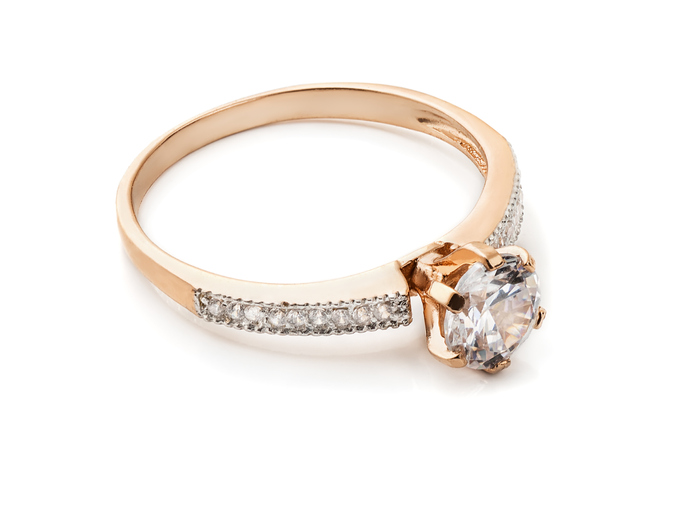
Most of it will be melted anyways to make other jewelry, so when estimating the price, don’t take into account any sentimental values like an engagement or wedding ring.
With that said, any designer jewelry that you may have will increase its value if it’s a household name.
Always do comprehensive research on your collection prior to approaching vendors.
Step 7: Check with BBB prior to closing a deal
The Better Business Bureau, or the equivalent of that in your location, will have a list of all the businesses and their reputation.
This will save you from making a deal with any company that has unsavory practices or that treats people unfairly.
When You Want to Sell to a Dealer
Here, as well, you have 5 steps to take before you make a deal with a gold dealer.
Step 1: Separate and organize your gold
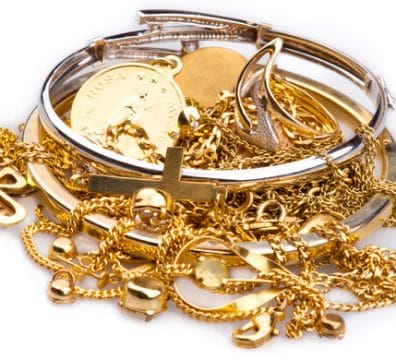
Gold jewelry or whatever you’d like to sell needs to be organized.
This will save the dealer a lot of time and they will be immediately become more positively inclined toward you, as most people just drop a pile of items in their lap, so to speak.
This may give you a better deal at the end, as you didn’t waste their time.
Start by removing any gold-plated, gold imitation or fake gold from your collection.
A strong magnet really helps here, as gold is not drawn to it at all, so if anything besides the clasp sticks to the magnet, it may be gold-plated or fake.
So it might be a good idea to completely remove these items from your collection.
Step 2: Check your gold quality
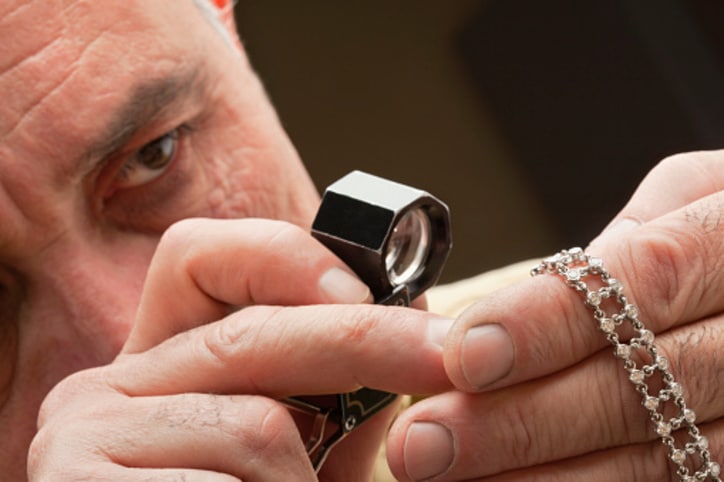
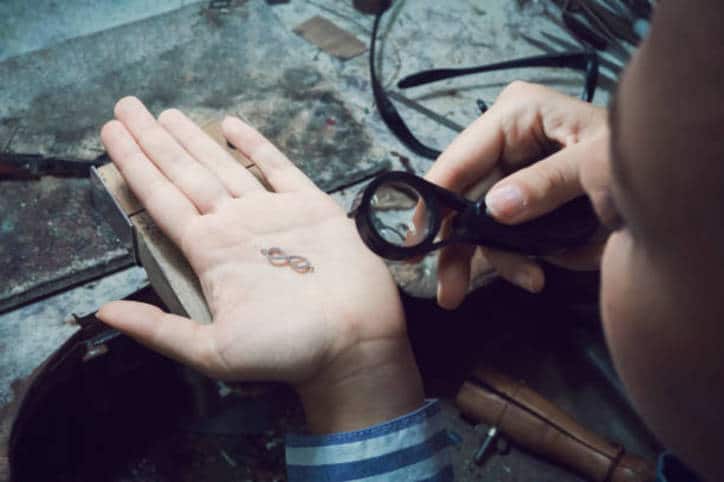
Use a magnifying glass to check the label on the gold.
Every gold piece is engraved with a label; it can be “10k” or “14k”, etc.
If they have that kind of mark, put them aside in a small ziplock pouch.
If you see “GF” or “GP” on any of your items, it means they’re gold-plated, and you should remove them from the main collection, as most dealers won’t buy these pieces at all.
Step 3: Catalog your inventory
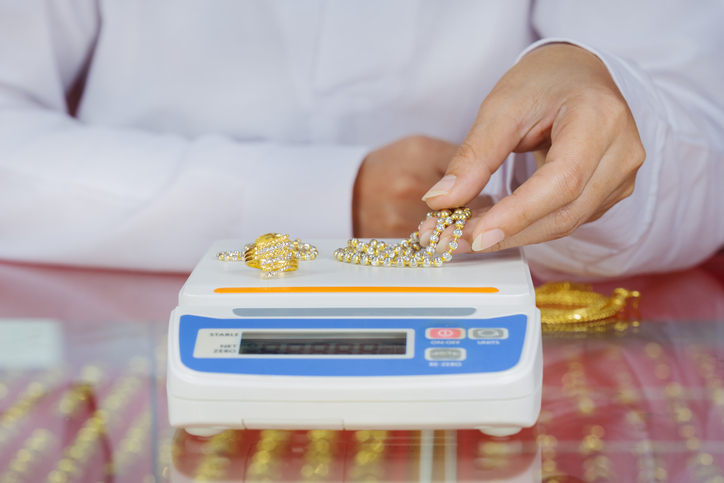
Make a list of the items in your collection and weigh each type of gold separately and in grams.
Some gold buyers will use a unique system called Troy ounce, so don’t be alarmed.
If you don’t have a small scale, you can purchase a digital food scale, or use one at the post office, as it’s used to weigh envelopes.
Step 4: Get several phone offers
Similar to selling to a shop; after the items are cataloged, separated and weighed, get at least 3 offers from different buyers.
Do not settle for the first offer you get.
You can start with some phone inquiries; if they don’t want to give you a phone quote after you give them a detailed description of the label, weight, and other characteristics, it would be better to avoid them, as they might have a hidden agenda or they might under price you with a terrible deal.
If they do give quotes, ask them if there are fees they can’t disclose over the phone, as many times there are such fees.
When getting quotes, make it a point to contact a refinery.
Gold Refinery of San Diego claims that 99% of the gold jewelers and pawn shops buy and resell to a refinery.
So contacting them directly will lower the commission a jeweler or a buyer would take for the same deal.
The trick is to find a refinery in your area that is open to the public.
Step 5: Research the dealer
This connects directly to the fifth thing you must do, which is research!
Before you go to any place that gave you a good phone quote, check their reviews.
Yelp.com and bbb.org are great places to start and many places can be found on google.
There are many “cash for gold” companies everywhere, so be careful, as some of them are scammers and will underpay you by a large amount if you’re ignorant of the market, the gold’s value, or that company’s bad practices.
Take the steps we’ve covered in this article and watch out for anyone who might want to scam you when you’re trying to sell your gold, so you can make sure you’ll get the best and the most fair deal possible.
[greeting]